
Why Playoff Assignments Need a Different Workflow Than Regular-Season Scheduling
Playoff scheduling is not just a regular-season copy and paste. Higher stakes, tighter eligibility rules, travel pressure, and faster communication all call for a more deliberate assignment workflow.
Playoffs change the assignment problem
Regular-season scheduling is mostly about coverage, balance, and keeping the calendar moving. Playoffs add a different layer of pressure. The games matter more, the available pool is often smaller, and the margin for assignment mistakes gets thinner.
That is why playoff work should not be treated like a simple extension of the week-to-week schedule. Assignors are usually balancing more than just open dates. They are checking eligibility, avoiding conflicts, protecting crew quality, managing travel, and keeping communication tight enough that no one misses a last-minute change.
For leagues using assignments and scheduling, the goal is not just to place officials on games. It is to make the playoff workflow visible enough that the right people get the right games, with less scrambling.
What changes in playoff assignment workflow
A playoff slate usually needs more review than a regular-season slate because the assignment criteria are stricter and the stakes are higher. Common checkpoints include:
- Crew eligibility and level of experience
- Conflicts with teams, sites, or prior assignments
- Travel time between venues, especially when multiple rounds are in the same day
- Rest windows after earlier games
- Late-game backup plans if an official declines or becomes unavailable
- Communication timing so crews can confirm details before they leave home
In regular season scheduling, an assignor may rely on familiar patterns and repeat crews. In playoffs, that can be risky if it overrides a fresh eligibility check. A good referee assignment software workflow makes it easier to review who is available, who is qualified, and which assignments should be held back for a second look.
That is especially useful for multi-sport organizations and minor hockey associations where playoff rounds may move quickly and sites can shift with little notice.
Build a playoff checklist inside the assignment process
The cleanest playoff workflow is one that forces assignors to slow down at the right points. Instead of handling everything in separate messages or spreadsheets, keep the key details attached to the game and the crew.
A practical playoff checklist usually includes:
- Confirm official availability before making assumptions.
- Check conflicts against teams, divisions, and prior games.
- Verify travel windows between assignments and venues.
- Assign based on playoff expectations, not just open slots.
- Send the crew a clear message with site, time, role, and any notes.
- Keep a visible fallback plan if a change happens close to game time.
This is where a referee scheduling app can help assignors keep everything in one place rather than chasing status through text threads. It is also useful when officials are managing their own calendars on mobile devices and need fast confirmation from the assignor side.
Faster communication matters more once the bracket tightens
Playoff schedules tend to move faster than regular-season schedules. A game time changes. A site changes. A crew gets reassigned. A backup official is needed. When that happens, the message has to reach the right people quickly and clearly.
The most effective communication is short, specific, and tied to the assignment record. That means the crew can see what changed, what stayed the same, and what action they need to take. It also means assignors can reduce the number of follow-up messages asking for basic confirmations.
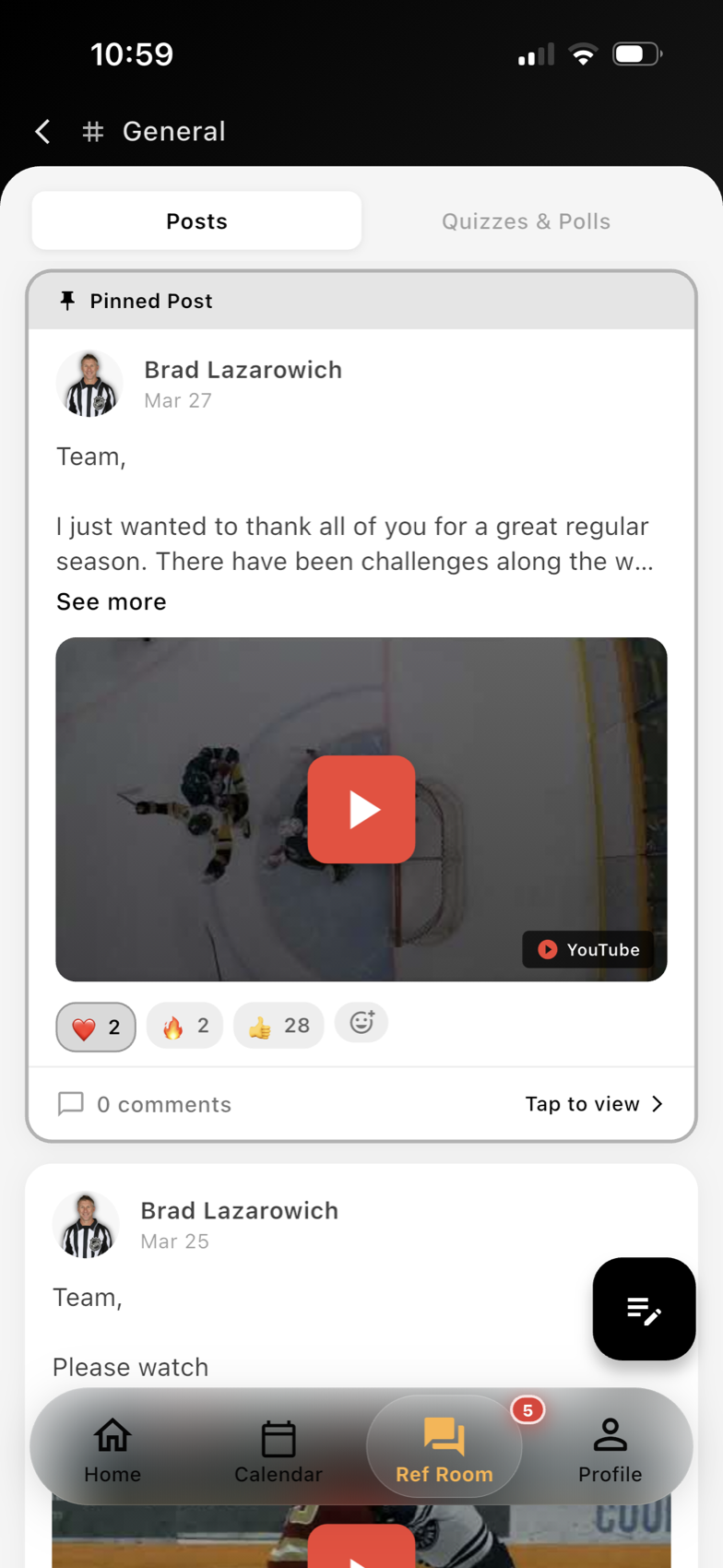
For leagues that want cleaner crew communication, Ref Buddy’s Ref Room communication can help keep assignment-related messages closer to the workflow instead of scattering them across different channels.
Treat playoff scheduling as a separate operations layer
Playoffs are a good time to review how your assignment process actually works under pressure. If the league is still using the same routine as the regular season, the result is usually more manual checking, more last-minute changes, and more chances for a conflict to slip through.
A better playoff workflow keeps the important details together: availability, eligibility, travel, communication, and game context. That gives assignors a clearer path from bracket to crew card, and it gives officials a cleaner way to prepare for higher-stakes games.
If your league wants to tighten that process before the postseason starts, begin with the assignment view, then layer in communication, reporting, and expenses once the workflow is stable.
Want cleaner referee operations?
Ref Buddy connects schedules, officials, crew communication, expenses, and reports so leagues can spend less time chasing details.
Schedule a Demo