
Why Game Status and Assignment Context Should Be Part of Referee Expense Review
Expense review goes faster and stays more accurate when assignors and league admins check the game record first. Completed, canceled, and modified assignments can all affect mileage, per diem, and payment approval.
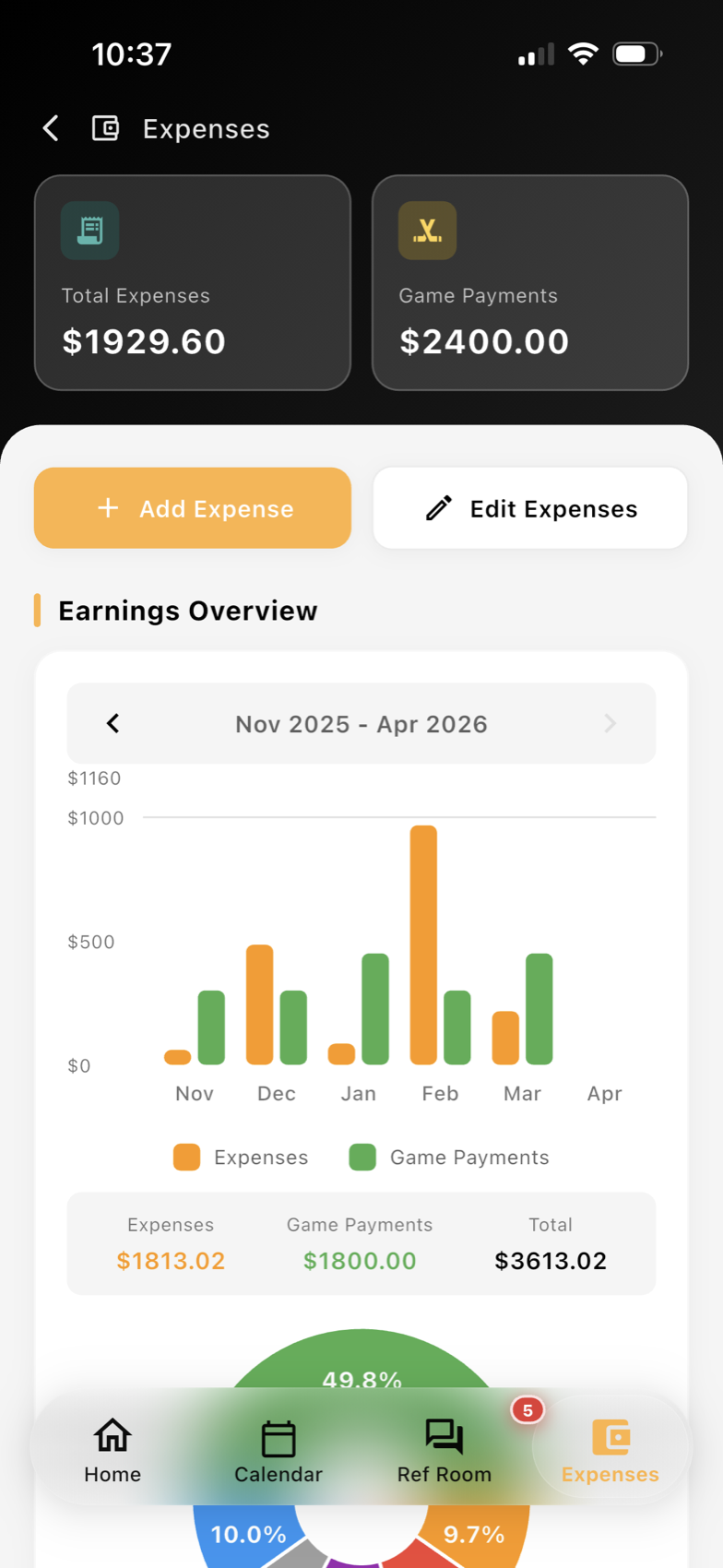
Expense review works better when it starts with the game record
Referee expense review is usually treated as a finance task, but in practice it is an operations task first. If a game was completed, canceled, shortened, moved, or covered by a replacement official, that context can change what should be paid and why.
That is why the cleanest expense workflow starts with the assignment record, not the reimbursement form. When the game status, crew details, and location history are attached to the assignment, assignors and league staff can review claims with less back-and-forth. It is easier to confirm whether a mileage request matches the actual venue, whether a per diem should apply, and whether the official worked the version of the game that was originally scheduled.
For leagues that manage a lot of movement, a referee expense tracking workflow tied to assignment context can save time for everyone involved.
Completed, canceled, and changed games should not be reviewed the same way
A completed game is the simplest case. The official worked the event, traveled to the site, and usually submits a standard expense claim. Even then, the review is easier when the system shows the assignment details side by side with the claim.
Canceled games need different handling. If a game was canceled before arrival, after travel started, or after the crew was already on site, the league may need to review the claim differently depending on its own policy. The important operational point is that the status should be obvious. Otherwise, an assignor may waste time asking the official to explain something the record already shows.
Modified games sit in the middle. A start time may shift, a rink may change, or a replacement official may be added. In those cases, the expense review should check what changed and when. A mileage claim that made sense for the original venue may not make sense after a move across town. A per diem claim may be correct for an overnight trip but not for a local makeup game.
When the assignment record shows the final game status, the review team does not have to reconstruct the day from messages and memory.
Mileage context and per diem decisions are easier with location history
Mileage is one of the most common places where game context matters. Two assignments can look similar on paper but create very different travel patterns in reality. A single official may cover multiple rinks, return for a late swap, or travel farther because of a same-day venue change.
That is why mileage review should look at the full path of the assignment, not just the final submitted amount. The league does not need a complicated process; it needs a consistent one. Compare the claimed trip against the assigned venue, the final venue if it changed, and the game status at the time of travel.
Per diem review benefits from the same approach. If a game was completed as scheduled and the official stayed overnight, the claim may be straightforward. If the game was canceled, shortened, or reassigned, the league should check whether the travel and timing still support the expense request under its own rules.
A Assignor Dashboard can help staff see the assignment history, game status, and crew context in one place before approving payment.
Better payment accuracy reduces corrections later
Payment accuracy is not just about avoiding overpayment. It also helps leagues avoid underpayment, repeated corrections, and frustrated officials who have to resubmit the same details more than once.
A practical review process usually asks a few simple questions:
- Was the game completed, canceled, or changed?
- Did the official work the final version of the assignment?
- Did the travel route match the venue that was actually used?
- Does the per diem request fit the timing of the game and the trip?
- Is there a note in the assignment record that explains the difference?
When those questions are answered against the game record, payment review becomes more consistent. It also helps assignors and finance staff spot patterns. For example, if certain rinks are repeatedly rescheduled or certain game types generate more travel exceptions, the league can improve planning for future assignments.
If your organization already uses Assignments and Scheduling, connecting that workflow to expense review makes it easier to keep game status, crew changes, and reimbursement decisions aligned.
A simple rule: review the claim in the same context the official worked the game
The most reliable expense process is the one that mirrors real officiating operations. Officials do not experience assignments as isolated forms. They experience them as a chain of status updates, venue details, crew changes, and game-day decisions.
Leagues get a better review process when they treat expenses the same way. Start with the game record, confirm the final status, check mileage and per diem against the actual assignment, and keep the explanation attached to the work that was done.
That approach is especially useful for youth sports leagues, minor hockey associations, adult recreation programs, and multi-sport organizations that need a repeatable way to process payment accurately without adding unnecessary admin steps.
If you want cleaner review and fewer follow-up questions, keep the expense workflow tied to the assignment workflow, not separate from it.
Want cleaner referee operations?
Ref Buddy connects schedules, officials, crew communication, expenses, and reports so leagues can spend less time chasing details.
Schedule a Demo