
Why Expense Questions Should Stay Attached to the Game Record
When mileage, game completion, and payment review all live with the assignment, assignors and officials spend less time chasing details later. A clearer game record makes expense questions easier to answer and easier to close.
Why expense questions are easier to solve when they start with the game record
Expense questions rarely begin as expense questions. An official wants to know whether a game was completed, whether a second trip was needed, whether mileage should be adjusted, or whether a change in crew assignment affects the payment review. If that information lives in separate places, someone has to reconstruct the story later.
That creates avoidable back-and-forth for assignors, league admins, and officials. A better approach is to keep the expense conversation attached to the game record from the start. When the assignment, completion status, crew notes, and expense details are connected, the people reviewing payment can answer the question in context instead of hunting through messages.
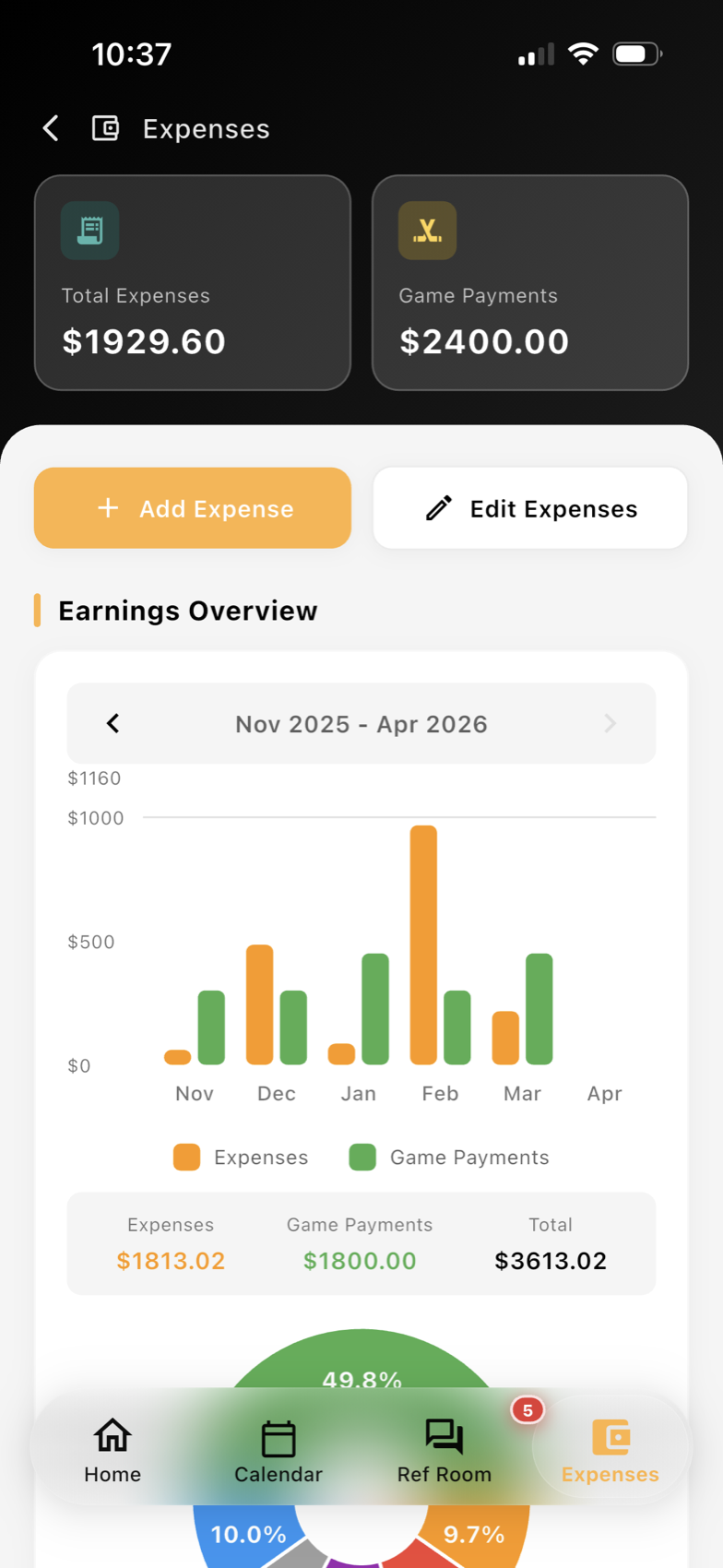
For leagues using Expenses, that means the record can carry the details needed for a clean review: who was assigned, what the game was, whether it was completed as scheduled, and what travel notes were entered. It also gives officials a clearer place to check what happened after the game instead of relying on memory or scattered texts.
What belongs in the same workflow as mileage and payment review
A practical expense workflow does not need to be complicated. It just needs to keep the useful details together:
- Assignment context: game number, site, division, start time, and crew
- Game completion: whether the game was played, shortened, postponed, or changed
- Mileage notes: travel distance, split trips, or unusual routing when the league records them
- Payment review: approved, pending, or needs follow-up
- Supporting notes: replacement official, rink delay, or schedule change that affects the expense question
This is especially helpful in youth sports leagues, adult recreational leagues, and minor hockey associations where one missed note can turn into several messages. A travel adjustment may be obvious to the assignor who handled the change, but not to the person approving expenses a few days later.
When officials use a Referee Companion App or similar mobile workflow, they can see the assignment details and submit information while the game is still fresh. That reduces guesswork and helps the league keep a more consistent record.
How assignors can reduce follow-up without slowing down approvals
Most assignors do not need more messages. They need fewer unclear ones.
A few habits make expense handling cleaner:
- Record the game status before closing the assignment.
- Add mileage or travel notes where the review team can see them later.
- Keep replacement or late-change context attached to the same record.
- Use a consistent payment status so officials know whether they are waiting, approved, or missing information.
- Avoid moving the conversation into a separate thread unless there is a true exception.
This matters because assignment history and payment review are often connected. If a game was completed by a substitute official, or if a crew was moved after an arena delay, the expense question usually depends on that assignment context. A clean record helps the assignor answer quickly and gives the official a clear explanation.
For leagues managing many rinks or multiple sports, a shared Assignor Dashboard can make those reviews easier to track without losing the schedule context that explains the expense.
A simple standard for clearer expense decisions
Leagues do not need a perfect system to improve this process. They need a standard that is easy for officials and assignors to follow every week.
A useful standard is:
- If the question changes the payment, attach it to the game record.
- If the answer depends on a schedule change, attach the change to the assignment.
- If the note matters to the official later, keep it visible where the official can find it again.
- If the review depends on game completion, make that status easy to see.
That approach supports better league referee management because it reduces ambiguity. It also makes post-game administration easier for staff who are not the original scheduler.
Expense tracking is not just accounting cleanup. It is part of officiating operations. When leagues connect payment review to the underlying game record, officials get fewer surprises, assignors spend less time reconstructing details, and everyone has a clearer path from assignment to approval.
Want cleaner referee operations?
Ref Buddy connects schedules, officials, crew communication, expenses, and reports so leagues can spend less time chasing details.
Schedule a Demo