
Why Arrival-Time Expectations Belong Inside Every Referee Assignment
Arrival expectations are easy to overlook until a crew is rushing. Keeping arrival windows, rink notes, and pre-game details inside the assignment gives officials a clearer start.
Arrival time is more than a clock detail
Most referee assignments include the obvious information: date, time, venue, division, and crew. Arrival expectations can feel secondary, so they often end up in a separate message or a season-opening reminder. That works until the schedule gets busy, a rink has an unusual entry process, or a newer official does not know what the assignor expects.
Arrival time is really part of game readiness. Officials may need time to find the right entrance, check dressing room access, connect with partners, review division expectations, confirm equipment, or handle a short pre-game conversation. If the assignment only shows puck drop, officials are left to infer the rest.
Putting the expectation inside the assignment makes the standard easier to follow. It also reduces the awkwardness of repeating the same reminder every weekend.
What officials should see before they leave
A useful assignment should answer the questions officials ask before they get in the car. When should they arrive? Which entrance should they use? Is there a room code, check-in desk, parking note, or rink-specific instruction? Does the crew need to meet earlier because of a tournament format, playoff game, or supervisor presence?
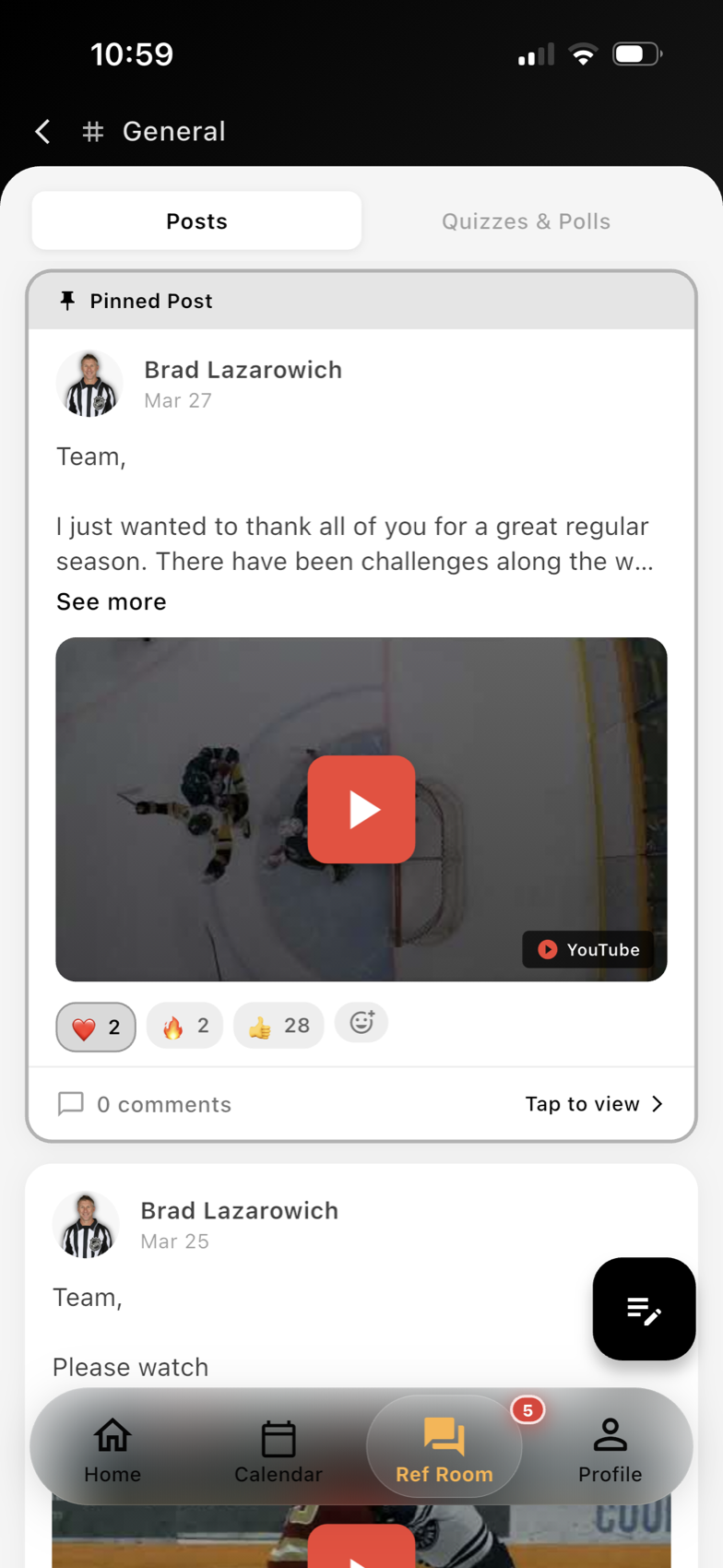
Those details fit naturally beside Ref Room communication, because they affect the whole crew. If one official receives the note by text and another misses it, the crew starts unevenly. If the note sits on the assignment, everyone sees the same version.
This is especially helpful for newer officials. They may know the rules and mechanics, but they may not yet know each rink's habits or each division's pace. Clear arrival notes remove a small but meaningful source of uncertainty.
How assignors can avoid message drift
Message drift happens when the original assignment says one thing, a later text says another, and the final update lives in someone's memory. Arrival expectations are vulnerable to this because they often change for practical reasons: delayed ice, a moved room, a late supervisor note, or a tournament check-in process.
A cleaner workflow keeps the assignment as the source of truth. If arrival timing changes, the update should be visible in the assignment and communicated to the crew from there. Assignors still may need urgent messages, but the message should point back to the same record instead of creating a competing version.
That also helps league staff. When a question comes up later, they can see what was communicated and when, rather than asking the assignor to search through personal messages.
A simple standard to use across the season
Leagues do not need complicated language for arrival expectations. A simple standard can cover most games: arrive a set number of minutes before game time, check the assignment for rink-specific notes, and confirm any unusual conditions with the crew.
The key is consistency. When every assignment includes the same kind of arrival field, officials learn where to look. Assignors spend less time repeating instructions. Supervisors and league admins get a cleaner view of whether expectations were clear before the game.
Good communication is rarely dramatic. It is usually the result of small details being easy to find at the right moment. Arrival time is one of those details. Put it where officials already look, and the whole crew starts the game with less guesswork.
Want cleaner referee operations?
Ref Buddy connects schedules, officials, crew communication, expenses, and reports so leagues can spend less time chasing details.
Schedule a Demo