
What Youth Sports Leagues Should Look for in Referee Scheduling Software
For youth sports leagues, referee scheduling software should do more than build a calendar. Look for tools that keep official profiles current, simplify assignment offers, support mobile communication, and make reporting easy on game day.
Start with the scheduling problem youth leagues actually have
Youth sports leagues rarely struggle with just one part of scheduling. The harder problem is connecting several small tasks: matching the right official to the right game, checking availability, sending assignment details, tracking responses, and keeping crews informed when something changes.
That is why referee assignment software matters. A useful system should help assignors move from a simple calendar view to a working schedule with fewer manual follow-ups. For many leagues, especially those covering multiple age groups or venues, the best workflow is the one that reduces back-and-forth without hiding the details that matter to officials.
If your league is evaluating tools, start by asking a simple question: can the software help assignors make decisions quickly while still giving officials enough information to accept confidently?
Look for official profiles that reflect real game needs
A schedule is only as good as the data behind it. Youth leagues should look for software that supports clear official profiles, including role, level, certifications or credentials where relevant, travel preferences, and availability patterns. Even when a league is small, those details help prevent obvious mismatches before a game is offered.
Official availability tracking is especially important when volunteers, part-time officials, and developmental crews all share the same schedule. Good assignor software should make it easy to see who is open, who is limited, and who should not be considered for certain game types or locations.
It also helps when assignors can sort and filter by practical criteria rather than rebuilding a list every time. For example, a youth hockey assignor may need to balance experience, rink location, and same-day travel. A multi-sport organization may need to track officials across different seasons with different rules and crew expectations.
A strong profile workflow does not have to be complicated. It just needs to keep the right information visible at the moment of assignment.
Communication should follow the assignment, not sit outside it
Youth leagues often lose time when assignment details live in one place and communication lives somewhere else. A good referee scheduling app should make it easy to send offers, confirm acceptance, and share last-minute updates without forcing assignors to copy information into separate threads.
That matters because many game-day issues are simple information problems: wrong rink entrance, changed start time, weather delay, or crew role adjustment. When communication is attached to the assignment, officials are less likely to miss context and more likely to arrive prepared.
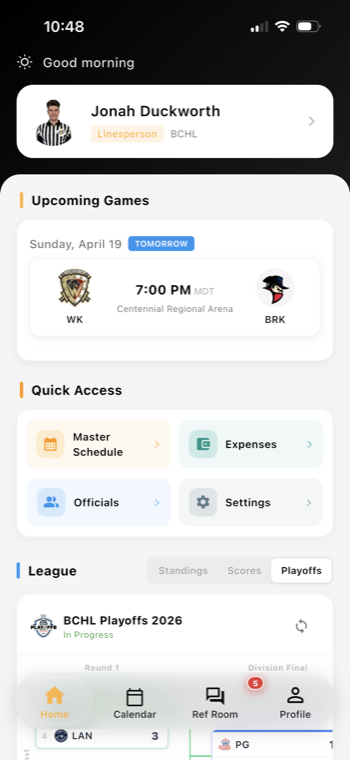
This is also where mobile referee app workflows become useful. Officials should be able to see the game, the crew, the venue, and any notes from a phone without hunting through emails or screenshots. For assignors, that means fewer “Did you get my message?” calls and fewer reminders sent by hand.
If your league is building a cleaner workflow, the Assignor Dashboard is a good place to review how scheduling, availability, and communication can stay connected.
Game-day reporting should be simple enough to use after the buzzer
A schedule is not finished when the game starts. Youth leagues also need a clean way to capture what happened after the game: completion status, incidents, notes, and any report that needs to stay linked to the assignment.
That is where game report software becomes valuable. If reporting takes too long, officials postpone it or send incomplete notes. If it is easy to open on a phone and tied to the game record, follow-up becomes more consistent for assignors and league administrators.
Look for tools that make it straightforward to:
- mark a game complete or incomplete
- attach game notes or incident details
- keep reporting tied to the correct assignment
- review the record later without searching email chains
For leagues that also manage travel or per-game payments, it helps when reporting and expenses can be reviewed in the same operational flow. That does not remove judgment from the assignor, but it does reduce the number of separate places people need to check.
A practical checklist for youth leagues evaluating software
When a youth league compares referee scheduling software, the goal is not feature count. It is whether the tool matches the way assignors and officials actually work.
A practical checklist includes:
- simple scheduling views that are easy to scan
- clear official profiles and availability tracking
- mobile-friendly communication for offers and updates
- game-day reporting that officials can complete quickly
- support for multi-venue, multi-division, or multi-sport operations
- a workflow that keeps assignment details tied to the game record
If your league wants to reduce scheduling friction, look for software that helps assignors stay organized without adding extra steps for officials. The best fit is usually the system that keeps the schedule accurate, the crew informed, and the game record complete.
For a closer look at assignment workflows, visit Assignments and Scheduling and compare it against your current process.
Want cleaner referee operations?
Ref Buddy connects schedules, officials, crew communication, expenses, and reports so leagues can spend less time chasing details.
Schedule a Demo