
How a Single Source of Truth Reduces Confusion During Last-Minute Referee Changes
When a referee drops out close to game time, leagues move faster when replacement updates, crew notifications, venue context, assignment status, and the audit trail all live in one place. A single source of truth helps assignors keep communication clean without recreating the schedule from scratch.
Why last-minute changes go smoother when everyone reads the same record
Late referee changes rarely happen in a clean, isolated way. One official cancels, another becomes available, the venue changes, the crew needs updated contact details, and someone still has to confirm whether the game should stay on the board, move to a standby list, or be marked covered. When those details live in separate texts, spreadsheets, and phone calls, the risk is not just confusion. It is duplicated work, missed context, and inconsistent messaging.
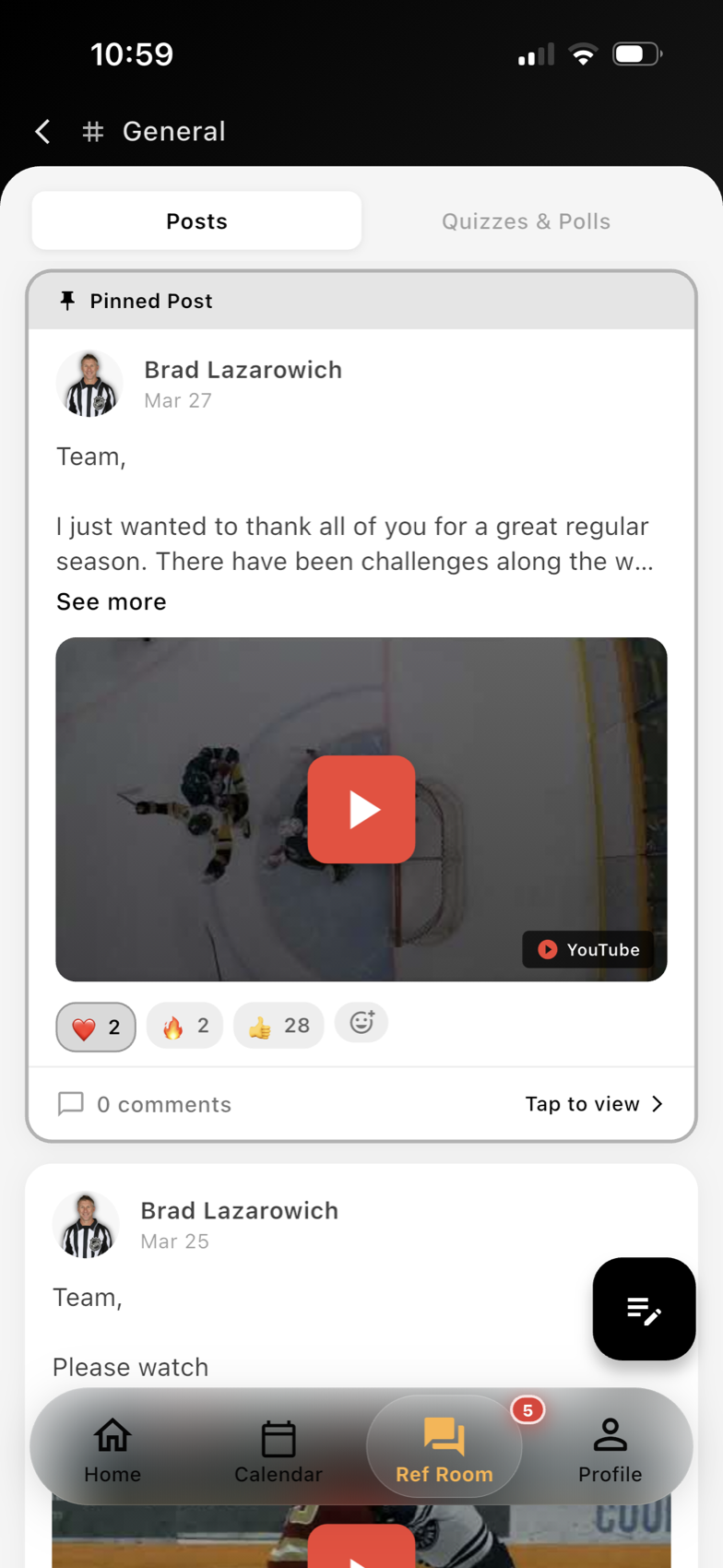
A single source of truth gives assignors and league staff one current assignment record to work from. That record should show the original assignment, the replacement update, and the current status in the same place. For leagues using Ref Room communication, that means the conversation stays attached to the game instead of spreading across personal message threads.
What needs to stay attached to the replacement update
A useful last-minute workflow does more than note that “someone else is working the game now.” It keeps the operational details tied to the change so the next person does not have to rebuild the story.
At minimum, the assignment record should keep track of:
- Replacement updates: who was removed, who accepted, and when the change was made
- Crew notification: which officials were told, and whether the full crew received the update
- Venue context: rink, field, court, room, or site-specific instructions that matter for arrival and check-in
- Assignment status: open, covered, pending confirmation, or completed
- Audit trail: a clear history of edits, messages, and timing for later review
That structure helps assignors make faster decisions because they can see what happened instead of asking the same question twice. It also helps officials prepare with fewer surprises. If a replacement needs a different jersey color, arrival time, parking note, or dressing room location, those details are easier to share when they stay on the game record.
How crew communication stays cleaner under time pressure
Most communication problems during a replacement are not caused by the lack of effort. They happen because too many people are trying to keep track of the same change from different directions. One person texts the replacement, another calls the partner, a third posts in a group chat, and a fourth updates the schedule later. By the time the game starts, nobody is fully sure which version is current.
A better approach is to treat the assignment record as the message hub. The assignor updates the game once, and the crew sees the same current information. That reduces duplicate messages and gives everyone a common reference point when questions come up.
This is especially useful for leagues that manage many games at once or move officials between sites during the day. A replacement should not require a separate explanation in every channel. The current assignment, venue context, and status should travel together.
A practical checklist for assignors handling a late replacement
When a referee drops out close to game time, assignors can move more confidently if they follow the same sequence every time:
- Confirm the original cancellation and timestamp it.
- Update the assignment status so staff know the game is not still unresolved.
- Add the replacement official and note who declined or stepped aside.
- Send crew notifications from the same game record.
- Verify venue context, arrival expectations, and any special notes.
- Leave an audit trail that shows the change history.
That workflow is not about adding more admin work. It is about reducing rework later. When the game record is complete, the same information can support follow-up on expenses, game reports, and post-game review without digging through old messages.
For leagues that want to keep replacement updates tied to the broader assignment process, the Assignments and Scheduling workflow can help reduce the gap between the schedule and the communication that surrounds it.
Keeping the record useful after the game is covered
The value of a single source of truth does not end when the replacement accepts. After the game, staff may still need to review who covered the slot, whether the crew received the right update, and whether the change created follow-up work for expenses or reports. That is where the audit trail matters.
A clear record supports better handoffs between assignors, supervisors, and league administrators. It also gives developing officials a more stable experience because they can see what changed, why it changed, and what they need to do next. Over time, that makes the whole operation easier to manage.
Last-minute referee changes will never disappear completely. But when replacement updates, crew notification, venue context, assignment status, and audit trail stay in one place, the work becomes much more manageable. For leagues and assignors, that is often the difference between a stressful scramble and a controlled recovery.
Want cleaner referee operations?
Ref Buddy connects schedules, officials, crew communication, expenses, and reports so leagues can spend less time chasing details.
Schedule a Demo