
How Playoff Assignment Workflows Need to Change After the Regular Season Ends
Playoff scheduling is not just a heavier version of regular-season assigning. Higher stakes, tighter eligibility checks, faster communication, and cleaner crew coordination all call for a different workflow.
Playoff scheduling is a different assignment problem
When the regular season ends, many assignors discover that their usual scheduling habits are not enough. Playoff games tend to have more pressure, fewer acceptable backup options, and less room for delay. A missed confirmation or an overlooked conflict can have a bigger ripple effect because every game carries more weight for teams, coaches, and league staff.
That is why playoff assigning should be treated as a separate workflow, not just a busier calendar. The core questions change. Instead of asking only whether an official is available, assignors also need to know whether that official is eligible for the level of game, whether the crew combination makes sense, whether travel is realistic, and whether everyone can respond quickly if something changes.
For leagues and associations, this is where Assignments and Scheduling becomes more than a calendar view. It becomes the place to manage priority decisions, preserve context, and keep a playoff slate moving without relying on scattered messages or memory.
What playoff workflows need that regular-season workflows can skip
In the regular season, an assignor may have more flexibility to experiment, rotate crews, or leave a little time between decisions. Playoff games usually reduce that flexibility.
A playoff workflow should account for:
- Crew eligibility by level, division, or assignment policy
- Conflicts with coaching, family, site, or prior game involvement
- Travel distance and turnaround time between games
- Faster response windows for acceptance or decline
- Clear backup coverage if a crew member drops late
- A tighter record of who was offered, accepted, or replaced
This is also where official availability tracking needs to be more specific than a general “available/unavailable” status. Many officials can work a normal week but not a playoff round with a late start, a long drive, or a doubleheader. If the assignor software can show those constraints clearly, the scheduler spends less time chasing corrections.
Playoff assigning also benefits from a more disciplined view of crew continuity. Some leagues want the same officials to work through a round when possible. Others want to avoid repeat pairings or protect neutrality. Whatever the local policy is, the workflow should make those constraints visible before assignments are sent.
Fast communication matters more when the bracket moves quickly
Once playoff games begin, schedule changes often happen faster than they do during the season. A venue issue, weather delay, ice problem, or late roster change can force a quick shift. When that happens, assignors need a single place to update the crew and see who has confirmed the change.
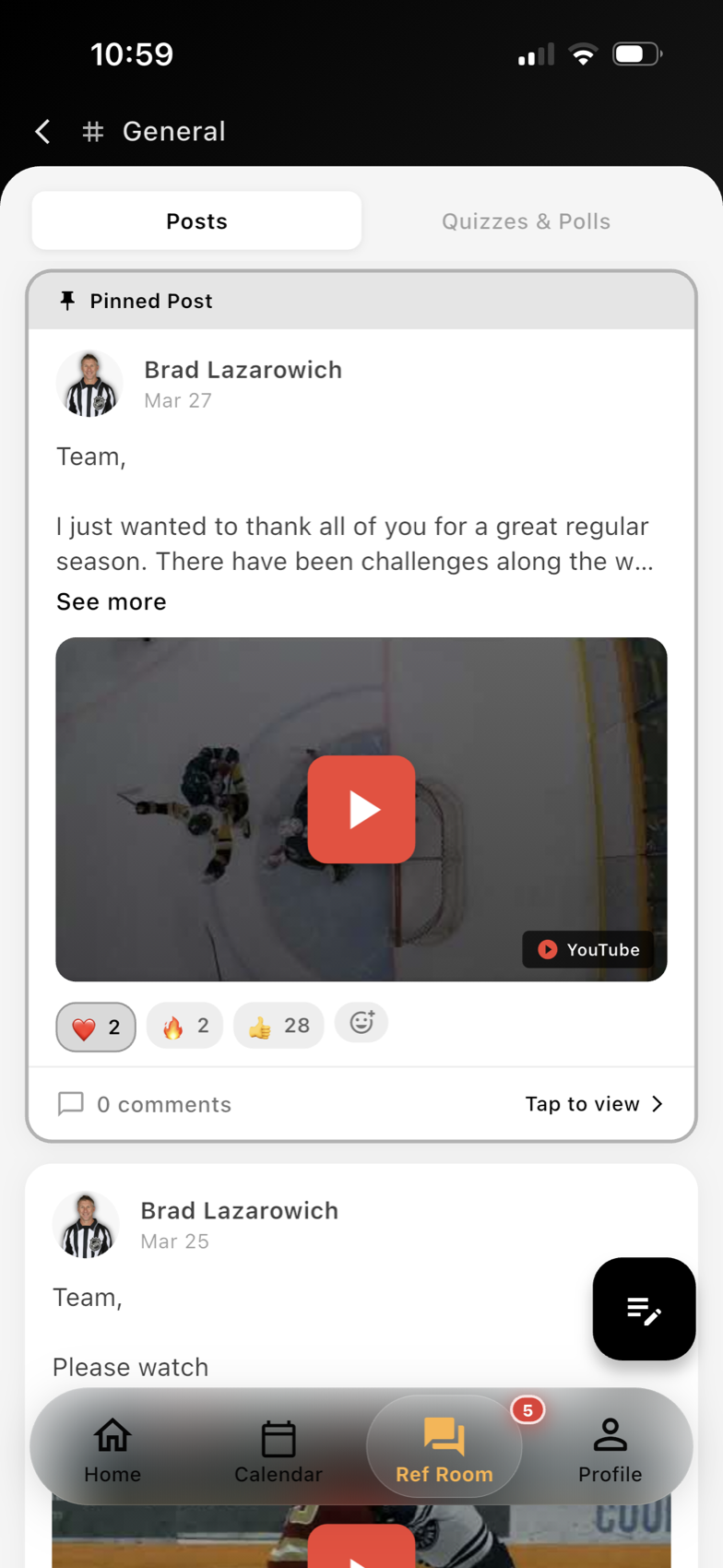
That is where a mobile-first communication process helps. Officials are not always sitting at a desk when a change comes through. They may be on the road, at work, or already between games. The shorter the path from update to confirmation, the less likely the league is to lose time to duplicate messages.
A playoff communication process should make it easy to:
- Send one update to the right crew
- See whether each official has acknowledged it
- Keep the original assignment record intact
- Avoid separate text threads that drift out of sync
- Attach changes to the same game record for later review
That is one reason many assignors prefer to keep playoff communication close to the assignment itself instead of splitting it across email, group chats, and spreadsheets. A cleaner flow reduces confusion when multiple rounds are happening at once.
A playoff checklist for assignors and league staff
Before playoff assignments go live, it helps to run a short operational checklist:
- Confirm eligibility rules for each round or division.
- Review official availability with a playoff-specific lens.
- Check travel time, venue start times, and recovery windows.
- Identify backup officials for high-risk games.
- Make sure communication paths are current for every assigned official.
- Keep notes on conflicts, exceptions, or policy decisions.
- Review how expenses, game reports, and follow-up steps will be handled after each round.
For leagues that handle multiple sports or multiple sites, the difference between a smooth playoff schedule and a stressful one is often the quality of the workflow, not the size of the staff. A system built for referee assignment software should help assignors move from “fill the games” to “manage the round.”
If you are reviewing your playoff process now, it can help to start with the tools that support the schedule itself, then build outward from there: Assignor Dashboard, Ref Room Communication, and the Referee Companion App.
The goal is fewer surprises and clearer decisions
Playoff assigning is still officiating operations, but the risk profile changes. The best workflow is one that gives assignors enough structure to make fast decisions without losing the details that matter later.
When availability, eligibility, crew communication, and assignment history live together, playoff weeks become more manageable. Assignors can move faster, officials know what is expected, and league staff have a cleaner record of how each game was staffed.
That does not eliminate the pressure of the postseason. It just makes the process more repeatable, which is exactly what high-stakes scheduling needs.
Want cleaner referee operations?
Ref Buddy connects schedules, officials, crew communication, expenses, and reports so leagues can spend less time chasing details.
Schedule a Demo