
How Mobile Assignment Acceptance Helps Officials Manage Busy Weeks
Officials often make assignment decisions between work, school, travel, and family plans. Mobile acceptance helps them respond faster while giving assignors cleaner status updates.
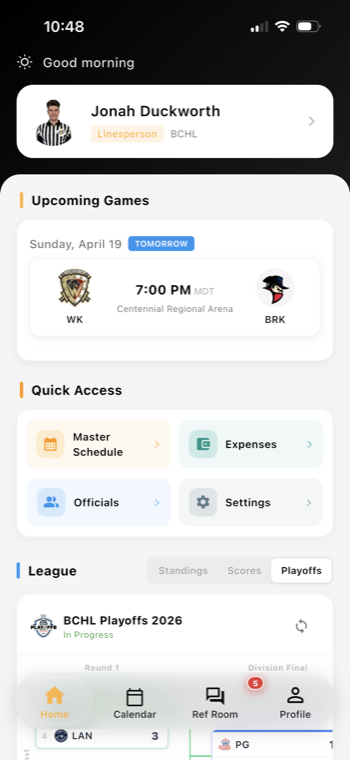
Officials make decisions in small windows
Most officials are not sitting at a desk waiting for assignments to arrive. They are checking schedules between shifts, classes, practices, family plans, and travel. When assignment acceptance depends on email chains or delayed desktop access, even a willing official can leave an assignor waiting longer than necessary.
Mobile acceptance gives officials a faster way to make a clear decision. They can review the game, crew, rink, time, and notes, then accept or decline while the context is still fresh. That helps the official protect their own schedule and helps the assignor understand whether the game is actually covered.
The point is not speed for its own sake. The point is certainty. A fast "yes" is useful, but a fast "no" can be just as valuable because it gives the assignor time to fill the game properly.
What officials need before tapping accept
A good mobile workflow should not pressure officials to accept with incomplete information. The assignment should include the details that shape a real decision: game level, start time, venue, crew role, expected arrival window, travel impact, and any notes the assignor wants the official to see.
That is why mobile acceptance should connect to the broader Referee Companion App, not sit as a shallow notification. Officials need enough context to decide whether the assignment fits their week and whether they can arrive prepared.
Clear decline options matter too. If an official cannot take the game because of work, travel, injury, another assignment, or a temporary availability change, that signal helps the assignor make better decisions next time. It also keeps the official from needing to explain the same constraint repeatedly.
Why assignors benefit from cleaner status
Assignors feel the benefit as soon as assignment status becomes visible. Instead of tracking who replied by text, who liked a message, and who still needs a reminder, the assignor can see accepted, declined, pending, and open roles in the same workflow.
That cleaner status is especially important when the schedule changes. If a game moves by an hour, the assignor needs to know whether the accepted official can still work it. If the crew is incomplete, the assignor needs to know which role is open. If several officials decline, the assignor needs to search with better context rather than guessing.
Mobile acceptance turns those moments into structured updates. The assignor still uses judgment, but the information is less scattered.
How mobile habits support official development
There is also a development benefit. When officials can see their assignments clearly, review game history, and manage availability from the same place, they build better habits around preparation. They can notice patterns in the divisions they work, understand travel demands, and keep closer track of upcoming games.
For newer officials, this reduces friction. They do not have to wonder whether they confirmed the right game or whether a late change reached the whole crew. For experienced officials, it saves time and keeps busy weeks organized.
Mobile assignment acceptance will not solve every scheduling challenge. But it does give officials a practical way to respond with confidence, and it gives assignors a much cleaner picture of where the schedule stands.
Want cleaner referee operations?
Ref Buddy connects schedules, officials, crew communication, expenses, and reports so leagues can spend less time chasing details.
Schedule a Demo