
How Assignors Can Keep Rink Access Notes Visible to Every Crew
Rink access notes only help when every crew can see them before they arrive. A simple communication workflow can keep arena entrances, dressing rooms, parking notes, and ice delays attached to the assignment so officials have the right details at the right time.
Why rink access details get missed
Assignors and schedulers often spend a lot of time making sure a game is covered, but a lot less time making sure the crew can actually get in the building, find the right room, and start on time. That gap shows up in small ways: officials arrive at the wrong entrance, miss a change in dressing-room access, or do not see a note about parking on the south side of the arena.
For leagues, the problem is not usually a lack of information. It is that the information lives in too many places. A rink may email one contact, a scheduler may text another, and an official may only see part of the update after they are already on the road. When the schedule changes, those details need to move with the assignment.
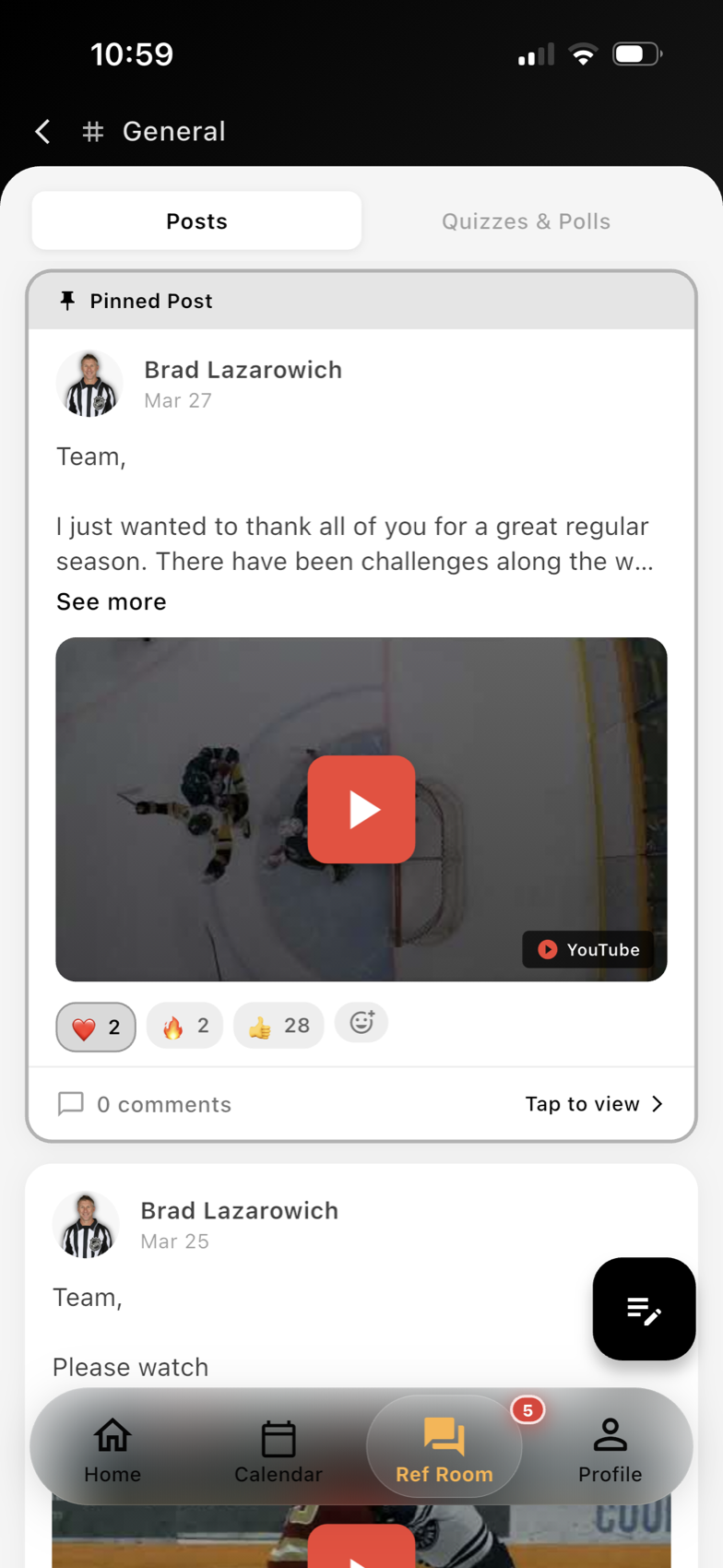
That is where Ref Room communication becomes valuable: it gives assignors one place to post practical updates that stay attached to the game and reach the whole crew.
What every crew should see before they leave
Rink access notes do not need to be long. They need to be consistent and easy to find. For most leagues, the most useful information falls into a few categories:
- Arena entrance instructions, especially when officials should use a side door, back hallway, or security desk
- Dressing room location and any limits on when it opens
- Parking notes, including lots that fill early or entrances that are closed during events
- Ice delay updates, warmup changes, or schedule shifts that affect arrival time
- Contact details for the rink supervisor or game-day host
A good rule is to write the note as if the crew is seeing it for the first time while standing outside the building. If the message answers the questions “Where do we go?” and “What changed?” it is doing its job.
This is also where assignor workflows matter. In Assignments and Scheduling, rink notes should appear with the game itself, not as a separate reminder buried in a different message thread.
How to keep access notes attached to the assignment
The safest communication process is the one that does not depend on memory. If a rink changes its entrance policy at 3:15 p.m., the update should be visible in the same place officials check for the assignment status.
A practical workflow looks like this:
- Add the rink note to the game record as soon as it is confirmed.
- Send the note to the assigned crew through the same communication channel used for schedule changes.
- Make sure replacement officials inherit the same note if the crew changes.
- Keep the latest version visible so older instructions do not sit beside current ones.
- Mark delayed or changed access details clearly when the arena opens late or gates move.
This approach helps with crew visibility. Every official sees the same instructions, and the assignor does not have to wonder whether one person got the update while another missed it.
It also reduces repeat questions. When officials can check the note in the mobile workflow before they leave, they are less likely to call the assignor from the parking lot asking for the dressing-room door or the correct entrance.
A simple standard for assignors and league staff
Leagues do not need a complicated policy to make rink access communication better. They need a standard that staff and officials can follow every time.
A useful format is:
- Location
- Access point
- Parking note
- Dressing room note
- Delay or timing update
- Contact person
Example:
"Main entrance closed until 5:00 p.m. Use west loading dock door. Officials room is next to the timekeeper’s box. Park in Lot B only. Ice delayed 20 minutes. If locked, call rink supervisor at front desk."
That is short, specific, and actionable. It gives the crew what they need without forcing them to sort through a long message.
If your league also tracks expenses and post-game information, keeping communication structured helps those processes too. A clear update trail makes it easier to understand why a crew arrived late, why a game started delayed, or why a replacement official needed extra guidance.
Building a repeatable communication habit
The best communication systems do not rely on one person remembering to forward a text. They make the note part of the assignment workflow so it travels with the game from publish to puck drop.
For assignors, that means creating a habit: whenever a rink sends access instructions, enter them where the crew will actually look. Whenever the instructions change, update the same place. And whenever a game gets reassigned, make sure the new crew sees the full context, not just the time and location.
That kind of consistency helps leagues run smoother, especially in hockey and other sports where venue access can change quickly. It supports officials, reduces confusion at the door, and gives schedulers a cleaner way to communicate the details that matter most.
If your crew communication process still depends on scattered messages, start with the one thing officials need most on game day: a clear note they can trust when they arrive.
Want cleaner referee operations?
Ref Buddy connects schedules, officials, crew communication, expenses, and reports so leagues can spend less time chasing details.
Schedule a Demo